Free public beta
through December 31, 2026

Explore The Story Toolkit while we build.

Learn about the beta
The Story Toolkit

Find the story.
Shape the meaning.
Bring it to life.

The Story Toolkit is a collection of tools for finding, shaping, practicing, and telling stories drawn from your own experience.

It is for anyone with something to tell: at work, on a stage, in an interview, in a classroom, or around a kitchen table. No special background needed.

Right now, the entire Toolkit is available as a free public beta.

Start wherever you need.

Open now

Three tools you can use today.

Find

Story Mining

Find the stories hiding in your experiences.

Open in beta

Guided reflections help you uncover stories through perspective, personal truths, turning points, unexpected twists, and memory prompts.

Useful for

  • Reflection
  • Story discovery
  • Personal storytelling
  • Finding experiences worth exploring

Practice

Story Gym

Practice using stories, a few minutes at a time.

Open in beta

Work through short story-based practice activities designed to help you notice how stories create perspective, meaning, connection, and learning.

Useful for

  • Practicing story judgment
  • Examining how stories work
  • Strengthening instincts
  • Learning through short scenarios

Perform

Bring It to Life

Rehearse how a story sounds, feels, and connects when told aloud.

Open in beta

Rehearse the performance of a story using intention, beats, voice, body, emotional experience, and audience connection.

Useful for

  • Story delivery
  • Open mics and storytelling nights
  • Toasts and eulogies
  • Presentations and teaching
  • Everyday conversation
  • Story rehearsal

In the works

Coming next.

Map

Evidence Map

Coming soon

Find the experiences that show what you can do.

Shape

Story Coach

Coming soon

Shape the right experience into a strong interview story.

Leave your email and I'll let you know when these tools are ready.

Free public beta · through December 31, 2026

The whole Toolkit is open and free while it grows, and in 2027 it becomes a membership for developing storytelling over time.

Read about the beta

Your stories are yours.

Story content stays in your browser unless you choose to share or export it. The tools are designed to save personal work locally rather than in a central Story Toolkit story database.

Clearing browser data may remove locally saved work, so export anything you want to keep.

Read the full privacy note

The book

Go deeper into the ideas behind The Story Toolkit.

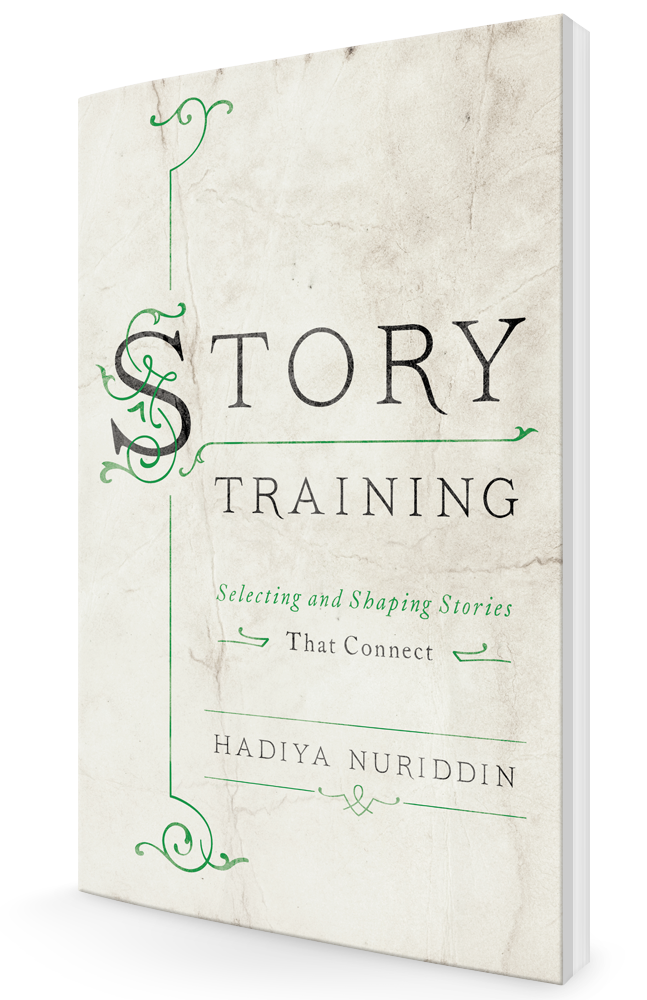
Three-dimensional cover of the book StoryTraining: Selecting and Shaping Stories That Connect by Hadiya Nuriddin
StoryTraining: Selecting and Shaping Stories That Connect — Hadiya Nuriddin

The Story Toolkit grew from the same principles explored in StoryTraining: Selecting and Shaping Stories That Connect: finding the stories already in your experience, understanding what makes them meaningful, shaping them with intention, and using them to create stronger connections.

The tools help you practice. The book helps you go deeper.

StoryTraining: Selecting and Shaping Stories That Connect
Hadiya Nuriddin

More about the toolkit

Also from Hadiya

Facilitating with Story

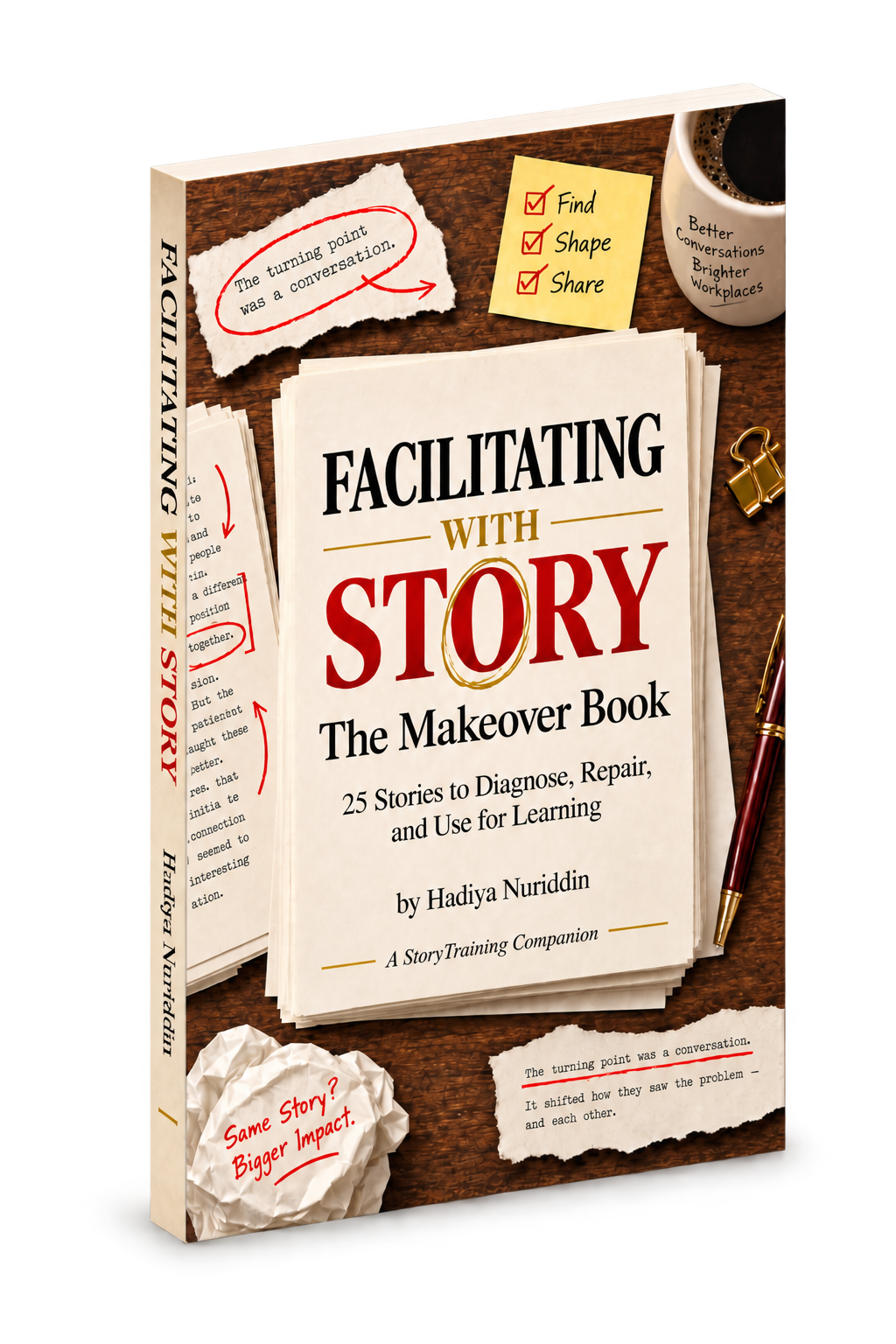
Three-dimensional cover of the book Facilitating with Story: The Makeover Book, 25 stories to diagnose, repair, and use for learning, by Hadiya Nuriddin
Facilitating with Story: The Makeover Book — Hadiya Nuriddin

People who have read StoryTraining often ask for examples rather than just polished stories, but examples that reveal how the thinking works before a story is finished. This book answers that need by turning the methodology into practical problems to solve, showing how stories can suffer from too much context, weak causality, unclear focal points, missing change, limited agency, forced morals, closed questions, or distracting delivery.

Facilitating with Story: The Makeover Book
Hadiya Nuriddin

Explore the book

StoryTraining tips

StoryTraining tips

A little something to think about.

Start with intent.

Know what you want the story to do before deciding how to tell it.