About
Built from years of thinking about how stories work.
The Story Toolkit brings together practical ways to find, examine, shape, and practice stories. It grew from a long-standing interest in how people use lived experience to create meaning, communicate ideas, and help others learn.
The tools are for anyone who tells stories, which is everyone: at work, on a stage, in an interview, in a classroom, or around a kitchen table. No particular job title or background is assumed.
Each tool does one job well. Story Mining is for reflection and discovery. Evidence Map is for gathering examples of what you can do. Story Coach is for shaping interview stories. The Story Gym is for short, scenario-based practice. Use one, or move among them as you need.

The creator

Hadiya is a learning and development professional, facilitator, author, and the creator of The Story Toolkit. She wrote StoryTraining: Selecting and Shaping Stories That Connect, a book about helping learning professionals find, shape, and tell stories that support learning and connection.
Her work focuses on the practical side of storytelling: how people recognize useful stories in their own experience, shape those stories for a purpose, and deliver them in ways that feel natural, credible, and human.
The Story Toolkit grew out of that work. It brings together tools for finding, shaping, practicing, and performing stories, with an emphasis on judgment rather than formulas. Hadiya’s goal is not to turn people into polished performers or force every experience into a story template. It is to help anyone become more observant, more deliberate, and more confident in the way they use stories, at work and everywhere else.
The source
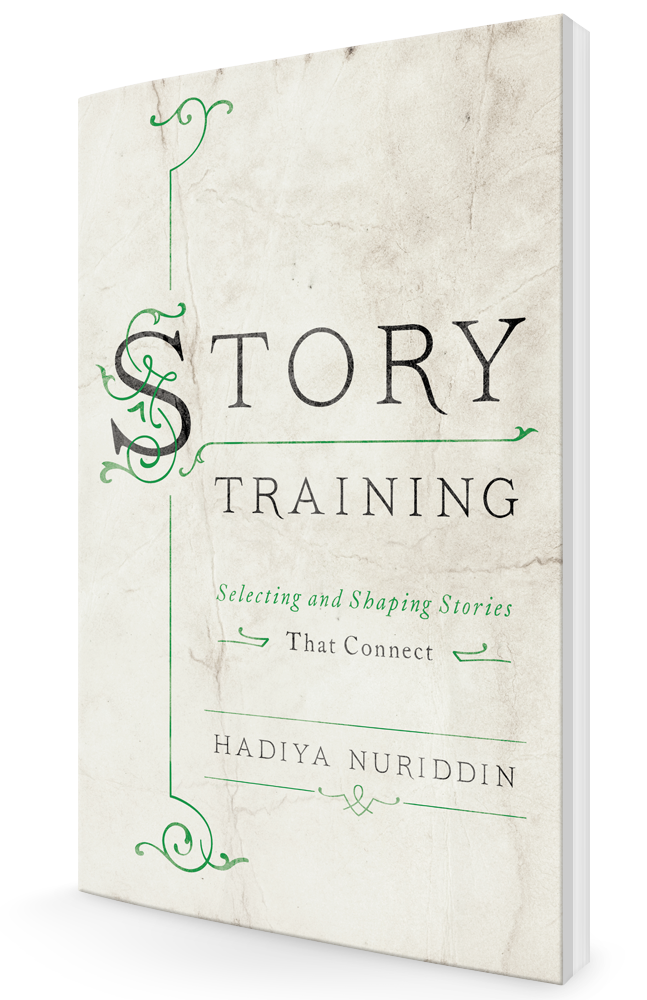
StoryTraining is the learning approach behind The Story Toolkit.
It combines storytelling principles with practical learning design to help people build storytelling skill through observation, judgment, reflection, and rehearsal.
Rather than treating storytelling as a single technique or formula, StoryTraining focuses on the different decisions that make a story work: recognizing meaningful experiences, identifying change, choosing useful details, understanding causal structure, considering audience and purpose, and bringing a story to life through delivery.
The approach is grounded in the idea that storytelling improves through practice. Learners are not simply given rules to remember. They are asked to notice, compare, choose, test, and rehearse—developing the judgment needed to use stories effectively in real situations.
The ideas apply wherever stories are told, from meetings and classrooms to stages and dinner tables, helping people understand ideas, see situations differently, remember what matters, and make better decisions.